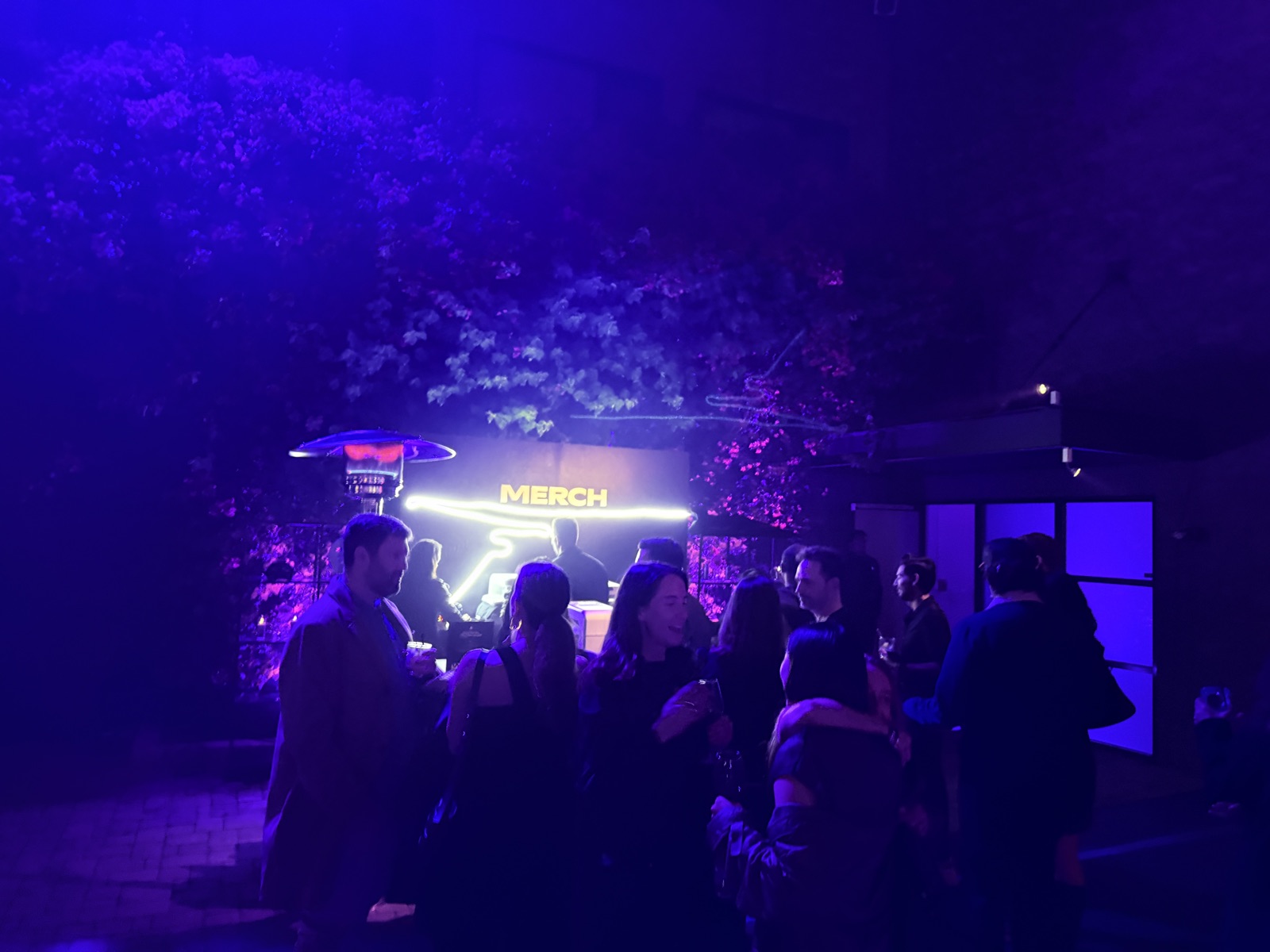
A mobile print shop is several hundred pounds of presses, tables, blanks, racks and road cases that has to get from a truck to a specific square of your floor plan, come up to temperature, and go back out again at the end of the night. Mobile merch printing load-in and venue access logistics is the half of the job that never shows up in a proposal and largely decides whether the station is running when doors open.
These are the questions worth answering at contract stage, not the week of.
Measure the route, not the room
Planners size the booth. Crews care about everything between the truck and the booth. Trace it once, physically or in photos, and note the narrowest point.
What we actually need in numbers: the freight elevator’s interior width and depth, its door opening height and width, and its rated capacity. Door opening is the one that bites — a car that swallows a pallet through a 34-inch door still forces cases in on end and doubles the trip count. Then: thresholds, curbs, stair runs, ramp grades, and whether the last stretch is concrete or plush ballroom carpet. Carts move beautifully on concrete and terribly on thick pile.
Ask the distance too. Four hundred feet from freight door to booth across a convention hall is six to eight cart trips, which is an hour of crew time nobody budgeted. A single photo of the service corridor and the elevator door answers more questions than a long email thread.
Docks, appointments and what the truck is
Most venues run dock appointments in thirty or sixty minute slots. Miss yours and you join the back of a queue behind a beverage delivery, which is how a two-hour build becomes a forty-minute scramble. Book the slot when you book the room.
Tell the venue what is arriving: vehicle type and length. Docks refuse vehicles they were not expecting, and some docks are set at trailer height with no leveler, which means a box truck without a liftgate cannot unload at all. Ask whether a liftgate is required and whether there is a height restriction on the approach — low garage clearances in older downtown buildings are a common and very late surprise.
Then ask the unglamorous question: where does the truck sit for the next ten hours? Plenty of urban venues have no on-site parking, and a crew shuttling to a garage six blocks away changes both timing and cost.
Convention centers, drayage and labor rules
Major convention centers and many managed show floors have exclusive labor arrangements, and this is the biggest cost surprise in the category. Material handling — moving freight from the dock to your booth — is frequently exclusive to the show’s general contractor, billed by weight with a minimum. Electrical and rigging are often exclusive even where material handling is not.
Pull the exhibitor services manual early and find four things:
- The hand-carry policy. Most shows let one person carry what they can manage in a single trip through the front door without a cart. A heat press does not qualify.
- The EAC deadline. If an outside contractor is working your booth, that paperwork plus a certificate of insurance is typically due about thirty days out.
- Whether electrical is exclusive, and the advance order deadline.
- Target move-in times, if the show assigns them.
None of this is a reason to avoid a convention center — we work them constantly. It is a reason to have the numbers in the budget before the client sees the total. Our planning guide covers the wider timeline this sits inside.
Ballrooms, rooftops and driveways
Plenty of the best events have no dock at all. Hotel ballrooms usually load through a service corridor and a passenger-sized service elevator shared with catering, so the constraint becomes trip count and elevator waits rather than weight. Rooftops and pool decks tend to be fine until the last fifty feet, which is often a stair run or a gate too narrow for a cart. Backyards and residential streets mean permits, street parking, and hand-carrying across grass.
All of it is workable. It just changes crew size and arrival time, and it should be priced that way rather than absorbed on the day. Ask about noise and time restrictions too — many venues and residential neighborhoods bar load-in before seven in the morning or after ten at night, and that single line can reshape an entire schedule.
Circuits, and the arrival clock
Every heat press wants its own dedicated 20-amp circuit. Two presses on one household circuit will hold for a while and then trip the breaker under sustained load, which always happens at peak. Give the venue or the electrical contractor a count of 20-amp 120-volt circuits and a marked location on the floor plan, and order before the advance deadline — floor rates on show electrical are notably higher than advance rates.
Ask where the drop actually lands relative to the station. Sixty feet of cable across an aisle means cable ramps, and sometimes an approval you did not know you needed. Outdoors or in a park, a properly sized inverter generator is the answer; a small 2000-watt unit will not run two presses, so size it to the load rather than to the trunk space.
Finally, the clock. A multi-station build wants two to three hours on site before doors; a single station is quicker. Strike runs roughly 45 to 90 minutes and presses need to cool before they go in a case. If the venue contract ends at eleven and your event runs to 10:45, that is a conflict, not a detail — build strike into the contracted hours. Our post on what setup looks like on site walks through the rest of the build.
Send the venue details early
Give us the venue, the room and the date and we will work the load-in questions with the facility directly. Typical booking runway is four to eight weeks, which is also roughly when dock and electrical deadlines land. See pricing, call (562) 614-4800, or request a quote.
Frequently asked questions
What do you need from the venue before the event?
A load-in map or a few photos, the freight elevator interior dimensions and door opening, the dock appointment process, and confirmation of how many dedicated 20 amp circuits are available where the station will sit. Those four items resolve almost every load-in surprise.
Can you set up somewhere with no loading dock?
Yes. Ballrooms, rooftops, retail floors and backyards are all normal. What changes is crew size and arrival time, because everything moves in more trips through smaller openings. Tell us early and it goes into the quote instead of becoming a day-of problem.
How much power does a mobile printing station need?
Plan on one dedicated 20 amp circuit per heat press. Sharing a circuit between two presses will trip a breaker under load, usually at the busiest moment of the night. In venues, order circuits from the house electrical contractor before the advance deadline, which is meaningfully cheaper than ordering on the floor.
Plan your activation
Know exactly what to expect
Tell Merch Troop the product, guest count, city, venue, and deadline. We will recommend the right live-event merch station, crew, and product plan.